Most homeowners don't realize their HVAC system is one of the fastest ways mold spores spread from room to room. In our experience manufacturing filters for over a decade and helping more than two million households breathe cleaner air, a clogged or low-rated filter doesn't just fail to capture mold spores — it becomes part of the problem, pushing contaminants deeper into your living spaces with every cycle.
This page gives you the straightforward answers competitors won't: which MERV ratings actually intercept mold spores, why air filter replacement frequency plays a key role in reducing spore load, and the practical steps that make a measurable difference in your home's air quality.
TL;DR Quick Answers
air filter replacement
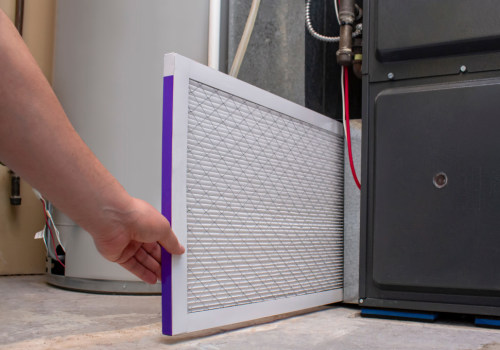
Replacing your air filter reduces airborne mold spores — but only when paired with the right MERV rating and a consistent change schedule. Here is what to know:
Replace every 30 to 45 days for homes managing mold, humidity, or respiratory sensitivities
Replace every 60 to 90 days for standard households
MERV 11 captures most common mold spore types
MERV 13 intercepts mold spores across the full particle size spectrum
A saturated filter recirculates the spores it was meant to capture
No filter rating eliminates mold at its source — moisture control is required
The most effective strategy: MERV 13 filter, consistent change schedule, indoor humidity held between 30 and 50 percent.
Top Takeaways
MERV rating determines real-world protection.
MERV 11: Captures most common mold spore types
MERV 13: Intercepts mold spores across the full particle size spectrum
MERV 11 is the minimum for mold-concerned households — MERV 13 is the clear choice
A clogged filter makes your mold problem worse.
Saturated filters allow captured spores back into your air stream
Neglected filters in high-humidity homes can become mold growth surfaces
Change every 30 to 45 days when actively managing mold concerns
Your HVAC system is the fastest way mold spores spread room to room.
Disturbed mold colonies release spores directly into your air
Return air ducts carry those spores straight to your filter
An undersized, under-rated, or overdue filter lets them straight through
Filtration controls spore load. Moisture control determines whether mold can grow.
No MERV rating can outwork a humidity problem or an unaddressed leak
Keep indoor humidity between 30 and 50 percent — per EPA and CDC guidance
High-rated filter plus consistent humidity control equals lasting protection
The water damage clock starts the moment moisture appears.
The EPA confirms wet materials must be dried within 24 to 48 hours
Acting within that window prevents a single moisture event from becoming a long-term air quality problem
Pair immediate drying with a filter upgrade for the strongest combined response
How Mold Spores Travel Through Your Home
Your HVAC system doesn't just heat and cool your home — it continuously moves air from every room through a central filter and back out again. Mold spores, which range from 1 to 100 microns in size, are light enough to become airborne the moment a mold colony is disturbed. Once airborne, they enter your return air ducts and reach your filter.
A filter that's rated too low, overdue for a change, or the wrong size for your system lets those spores pass right through. In our experience manufacturing filters for over a decade, this is one of the most common and correctable air quality failures we see across millions of households.
What MERV Rating Do You Need to Capture Mold Spores?
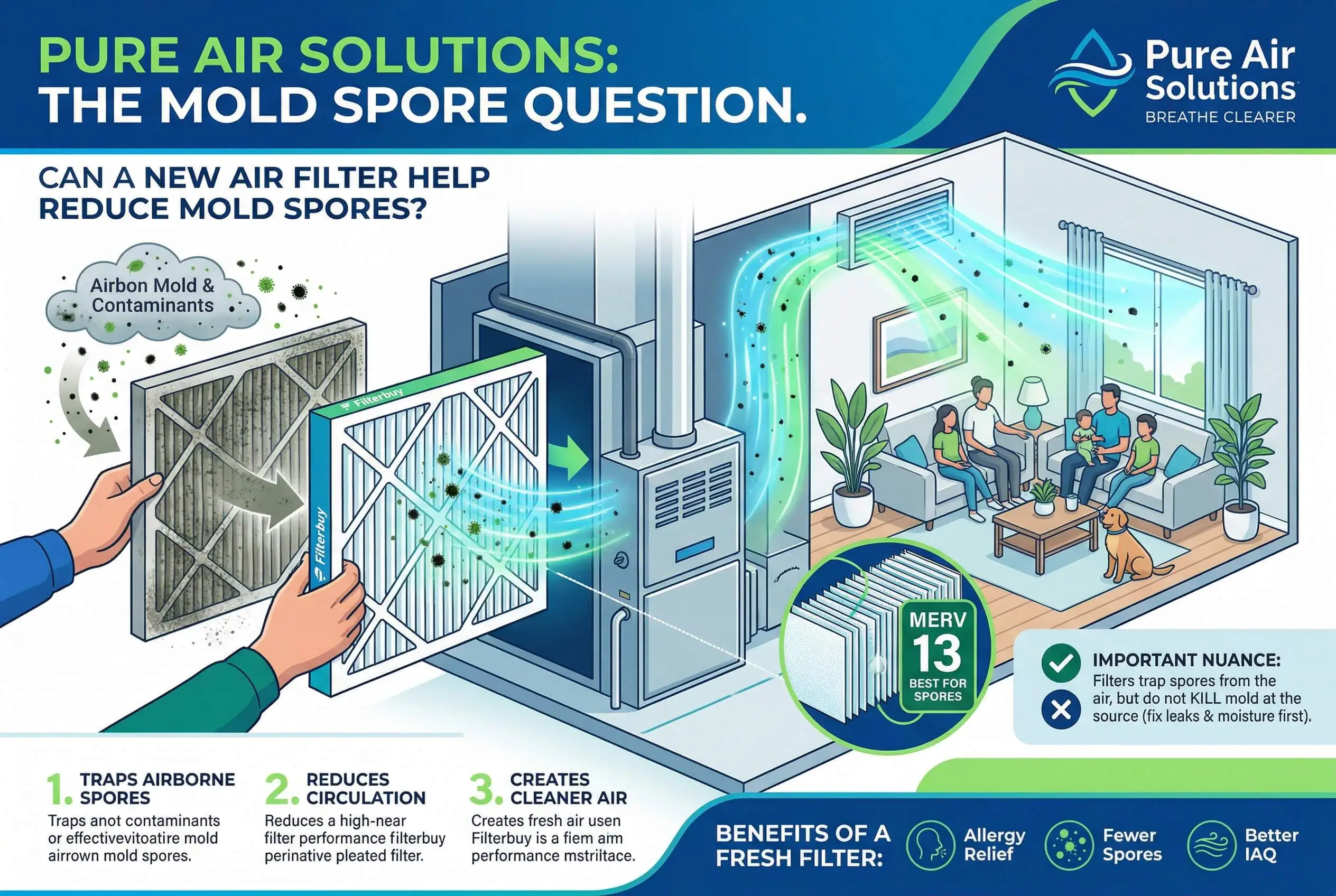
Not all air filters are built to intercept mold spores. MERV rating — Minimum Efficiency Reporting Value — determines the size of particles a filter can reliably capture. Here's how the ratings stack up against mold:
MERV 8: Captures larger particles like dust and pollen but misses smaller mold spores, particularly those in the 1–3 micron range.
MERV 11: Captures most common mold spore types. A meaningful upgrade for households with moisture concerns or allergy sensitivities.
MERV 13: Our strongest residential option. Captures mold spores across the full size spectrum, along with fine particulate matter, bacteria, and other microscopic contaminants.
For homes with a history of mold, high humidity, or occupants with respiratory conditions, MERV 11 is the minimum we recommend. MERV 13 is the clear choice when protection is the priority.
Why Filter Change Frequency Matters as Much as MERV Rating
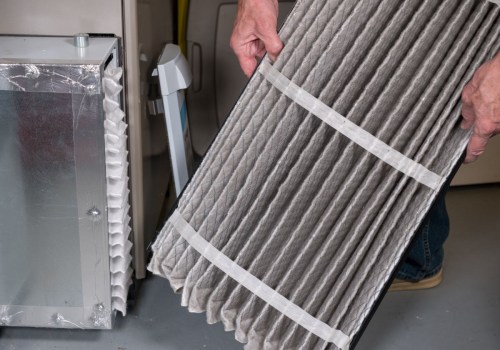
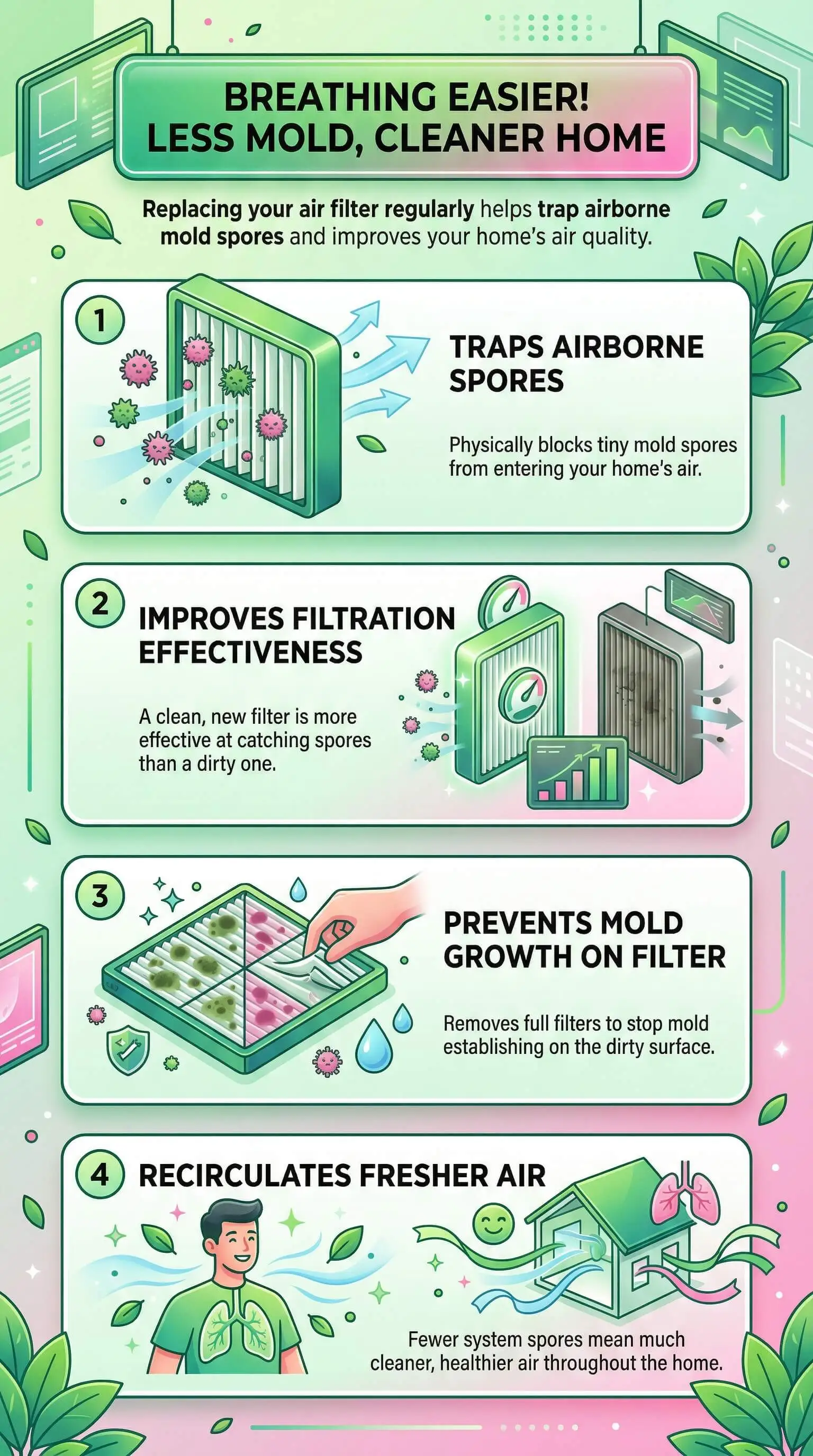
A MERV 13 filter left in place for six months offers far less protection than a MERV 11 changed on schedule. Once a filter becomes saturated, airflow restriction increases and captured particles — including mold spores — can re-enter the air stream. In homes with elevated humidity, a clogged filter can even become a surface where mold begins to grow.
Based on what we see across our customer base, these change intervals provide the most consistent protection:
Standard households: Every 60–90 days
Households with pets or mild allergy concerns: Every 45–60 days
Households with mold history, high humidity, or respiratory conditions: Every 30–45 days
The more aggressively you're dealing with mold, the shorter your replacement cycle should be.
What Air Filters Can and Cannot Do for Mold
An air filter is one of the most effective tools for reducing airborne mold spores, but it has real limits that are worth understanding.
What a quality filter does well:
Intercepts mold spores already circulating in your air
Reduces the spore count that reaches living spaces and occupants
Provides ongoing passive protection between air quality interventions
What a filter cannot do:
Eliminate mold at its source — growth on walls, ductwork, insulation, or HVAC components
Remove spores that are settled on surfaces rather than airborne
Compensate for excess moisture, which is the root cause of all mold growth
After serving more than two million households, the pattern is consistent: filtration controls spore load in the air, but moisture control determines whether mold can establish and spread in the first place.
When to Combine Filtration with Other Mold Control Measures
If you're noticing a persistent musty odor, visible mold growth, or recurring allergy symptoms that don't respond to filter upgrades, your filtration strategy needs to work alongside broader remediation steps.
The combination that delivers the most measurable results:
Upgrade to a MERV 11 or MERV 13 filter and maintain a 30–45 day change cycle
Address any moisture sources — leaks, condensation buildup, or inadequate ventilation
Have your ductwork inspected if you suspect growth within the system itself
Consider a whole-home dehumidifier in climates or basements prone to sustained high humidity
Replacing your air filter is the right first step. Pairing it with moisture control is what turns that step into lasting protection for your home and family.
"Most homeowners upgrade to a higher MERV filter expecting it to solve their mold problem — and then wonder why the issue persists. What we've learned after manufacturing filters for over a decade and working with millions of households is that filtration and moisture control are inseparable. A MERV 13 filter is one of the most effective tools available for reducing airborne mold spores, but no filter can outwork a humidity problem. The homes that see the most dramatic improvement are the ones that treat the filter as the first line of defense, not the only line of defense."
Essential Resources
The Filterbuy-Vetted Reading List for Homeowners Serious About Mold and Indoor Air Quality
After manufacturing air filters for over a decade and helping more than two million households breathe cleaner air, we know that an informed homeowner is a better-protected homeowner. Mold spores are invisible — but the decisions you make about filtration, humidity, and remediation have very visible consequences for your family's health. Every resource below comes from a U.S. government health or environmental agency and reflects the same authoritative guidance we rely on to back our own filtration recommendations.
Pick the Filter That Actually Captures Mold Spores — Not Just the One That Fits Your Budget
The EPA's Guide to Air Cleaners in the Home is the resource we point customers to first when they ask how to evaluate HVAC filter upgrades. It covers MERV ratings, real-world filtration effectiveness, and how to match filter performance to your household's actual air quality needs — without the manufacturer spin. https://www.epa.gov/indoor-air-quality-iaq/guide-air-cleaners-home
Understand What Mold Is Actually Doing Inside Your Home Before You Try to Stop It
Most homeowners try to solve a mold problem without fully understanding how mold establishes itself, spreads, and survives indoors. The EPA's Brief Guide to Mold, Moisture, and Your Home closes that knowledge gap — and explains exactly why filtration and moisture control must work together to produce any lasting result. https://www.epa.gov/sites/default/files/2016-10/documents/moldguide12.pdf
See the Hard Numbers on Which MERV Ratings Intercept Mold Spores at the Filter
In our experience, the single most common filtration mistake is choosing a filter that's undersized for the threat. The EPA's Indoor airPLUS Filtration Technical Bulletin shows precisely how MERV 11 and MERV 13 filters perform against mold spores across the full particle size range — the kind of data that should drive your filter selection, not packaging claims. https://www.epa.gov/sites/default/files/2020-06/documents/2019.11_tech_bulletin_filtration.pdf
Don't Let Humidity Quietly Undo Every Filter Change You Make
Here's something we reinforce with customers constantly: a premium filter installed in a high-humidity home is fighting an uphill battle it cannot win on its own. The EPA's Care for Your Air guide explains why keeping indoor humidity between 30 and 50 percent is non-negotiable for mold prevention — and how that single variable can determine whether your filtration investment actually protects your family. https://www.epa.gov/indoor-air-quality-iaq/care-your-air-guide-indoor-air-quality
Know Exactly Who in Your Home Is Most at Risk From Mold Spore Exposure
Not every household faces the same level of risk — and the families who come to us with the most urgent air quality concerns are almost always protecting someone with asthma, allergies, or a compromised immune system. The CDC's Mold: Basic Facts and Health Effects page breaks down precisely how mold spores enter the home through HVAC systems and which family members need the strongest line of defense. https://www.cdc.gov/mold-health/about/index.html
If Mold Is Already Growing in Your Home, Follow This Before You Touch Anything
Replacing your filter is the right first step — but if visible mold growth is already present, safe remediation requires more than a filter swap. The CDC's Mold Cleanup Guidelines outline the protective measures, cleaning protocols, and professional escalation thresholds that homeowners need to follow to remediate safely without spreading spores further through the home. https://www.cdc.gov/mold-health/about/clean-up.html
Use This Federal Assessment Tool to Find Moisture Problems Your Eyes Are Missing
One of the most valuable lessons from serving millions of households is that the mold you can see is rarely the whole story. The CDC/NIOSH Mold Testing and Remediation resource includes the Dampness and Mold Assessment Tool — a research-backed diagnostic framework developed to help homeowners systematically identify hidden moisture sources before they escalate into a larger air quality crisis. https://www.cdc.gov/niosh/mold/testing-remediation/index.html
These essential government-backed resources highlight the importance of high-quality air filters in reducing mold spore exposure, improving indoor air quality, and supporting healthier homes through proper filtration, humidity control, and safe remediation.
Supporting Statistics
After over a decade of manufacturing air filters and serving more than two million households, the data consistently validates what we see in real homes: indoor air is more compromised than most people realize, filter rating makes a quantifiable difference, and moisture will always outpace filtration if left unaddressed.
Your Home's Air Is More Polluted Than You Think
The EPA confirms Americans spend approximately 90 percent of their time indoors, where concentrations of some pollutants are often 2 to 5 times higher than typical outdoor concentrations. US EPA
What this means for mold-concerned households:
Indoor air — not outdoor air — is where your family's primary exposure happens
Every HVAC cycle without an adequate filter recirculates airborne mold spores
The threat is ongoing, invisible, and preventable with the right filtration in place
Source: https://www.epa.gov/report-environment/indoor-air-quality
MERV Rating Determines How Much Protection You're Actually Getting
The EPA's Indoor airPLUS Filtration Technical Bulletin confirms a MERV 13 filter demonstrates at least 50 percent removal efficiency for the smallest particles tested, while a MERV 11 filter removes roughly 20 percent of particles in the 0.3 to 1 micron range. EPA
What we've seen across millions of filter interactions:
MERV 8: Protects your HVAC equipment — not your air quality
MERV 11: Meaningful upgrade for households with moisture concerns or allergy sensitivities
MERV 13: Actively intercepts mold spores across the full particle size spectrum
For households with genuine mold concerns, that performance gap isn't a detail. It's the decision.
Source: https://www.epa.gov/sites/default/files/2020-06/documents/2019.11_tech_bulletin_filtration.pdf
Filtration and Moisture Control Are Two Halves of the Same Strategy
The EPA states that wet or water-damaged materials must be dried within 24 to 48 hours to prevent mold growth — and that cleaning up mold without fixing the underlying moisture source means the problem will most likely return. EPA
The most common reason a filter upgrade underdelivers:
The filter performed exactly as rated
The moisture source continued producing mold faster than the filter could intercept it
Without addressing the root cause, no MERV rating — including MERV 13 — can close that gap
Filtration and moisture control aren't two options. They're two halves of the same strategy.
Source: https://www.epa.gov/mold/brief-guide-mold-moisture-and-your-home
Final Thoughts
Replacing your air filter is one of the most accessible steps a homeowner can take to reduce airborne mold spores — but only when the right filter is chosen, changed on schedule, and paired with honest moisture control.
After manufacturing filters for over a decade and working with more than two million households, our perspective is clear: the homeowners who see the most lasting improvement never made a single change. They treated their HVAC filter as the first line of a layered defense — not a standalone cure.
Here's what our experience and the data consistently support:
The filter you choose reveals your priorities. A MERV 8 is a maintenance decision. A MERV 13 is a health decision. For households with mold history, allergy sufferers, or vulnerable family members, that distinction matters before the next filter change — not after a problem develops.
Change frequency matters as much as filter grade. A MERV 13 left in place for six months is no longer performing like a MERV 13. In homes with elevated humidity or active mold concerns, a shorter replacement cycle isn't optional — it's the strategy.
Mold is a moisture problem that filtration helps manage. A high-performing filter intercepts what's already airborne. It cannot stop what a persistent humidity problem or unaddressed leak is actively producing. Treating the air quality side without treating the moisture side means treating the symptom, not the cause.
The invisible threat demands a visible response. Mold spores circulate silently through the same air your family breathes every hour your HVAC runs. The homeowners who protect their families most effectively respond to what they can't see with the same urgency they give to what they can.
Clean air is a decision — made every time you choose the right filter, change it on time, and take moisture seriously. That's the standard we hold ourselves to in everything we manufacture, and it's the standard every home deserves.
FAQ on Air Filter Replacement
Can replacing my air filter really reduce mold spores in my home?
Q: Does changing my air filter help with mold spores?
A: Yes — but only if the filter is rated for the job. Key facts:
MERV 8: Not designed to intercept mold spores
MERV 11: Captures most common mold spore types
MERV 13: Intercepts mold spores across the full particle size spectrum
An under-rated or overdue filter doesn't just underperform — it recirculates the spores it was supposed to stop
How often should I replace my air filter if I have a mold problem?
Q: What is the recommended air filter change frequency for homes with mold concerns?
A: More often than most homeowners expect. Recommended change intervals:
Standard households: every 60 to 90 days
Pets or mild allergy concerns: every 45 to 60 days
Active mold concerns, elevated humidity, or respiratory sensitivities: every 30 to 45 days
After millions of customer interactions, change frequency is consistently the most overlooked variable in home air quality. A MERV 13 left in place for too long stops performing like a MERV 13.
What MERV rating do I need to capture mold spores?
Q: Which MERV rating is most effective against mold spores?
A: It depends on your household's risk level:
MERV 11: Minimum recommendation for moisture concerns or allergy sensitivities
MERV 13: Recommended when protection is the priority — confirmed by EPA data showing at least 50 percent removal efficiency for the smallest particles tested
Homeowners who upgrade from MERV 8 to MERV 13 and maintain a consistent change schedule report the most noticeable improvement in air quality.
Will replacing my air filter solve my mold problem completely?
Q: Is air filter replacement enough to eliminate mold in my home?
A: No — and this is the most important distinction to understand. Here is what a filter can and cannot do:
What a filter does:
Intercepts mold spores already circulating in your air
Reduces the spore count reaching living spaces and occupants
Provides ongoing passive protection between air quality interventions
What a filter cannot do:
Eliminate mold at its source
Remove spores settled on surfaces
Compensate for an active moisture problem
The combination that works: MERV 13 filter, consistent change schedule, indoor humidity held between 30 and 50 percent. Neither half of that strategy works without the other.
How do I know if my HVAC system is spreading mold spores through my home?
Q: What are the signs that my HVAC system may be circulating mold spores?
A: Watch for these indicators:
A musty odor that travels room to room when your system runs
Recurring respiratory symptoms that worsen indoors
Visible mold near vents, return air grilles, or the filter housing
Three steps to take immediately:
Inspect and replace your current filter
Check indoor humidity levels with a hygrometer
If the musty odor persists or mold is visible near the air handler, stop running the system and consult a professional — a compromised HVAC system doesn't just circulate air. It circulates the problem.
Take the Next Step Toward Cleaner Air and Fewer Mold Spores
Now that you know how air filter replacement directly impacts mold spore levels in your home, the next step is making sure you have the right filter rated for the job. Shop Filterbuy's MERV 11 and MERV 13 air filters — manufactured in the USA and delivered directly to your door — and give your home the protection it deserves.