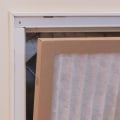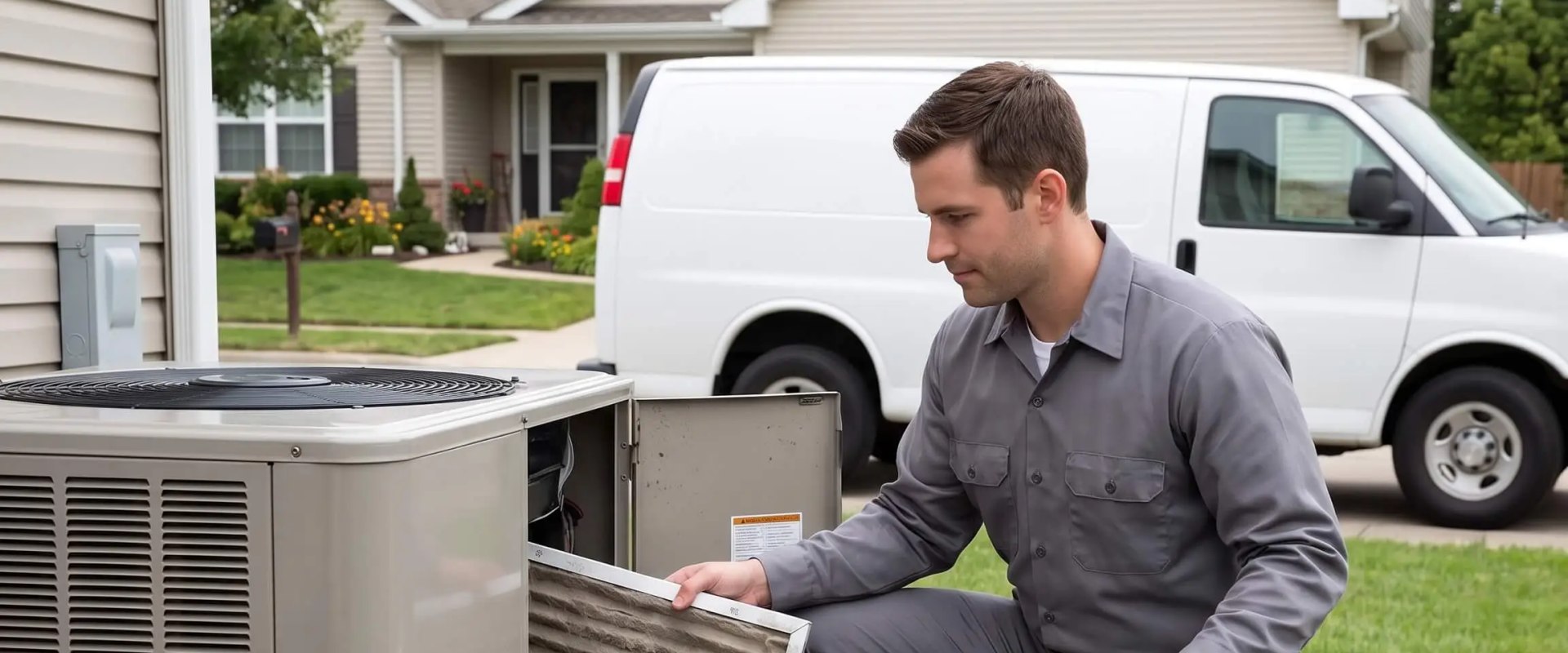
After manufacturing air filters for over a decade and serving more than two million households, we’ve seen that exact scenario repeat across Florida homes every storm season—June through November. The wrong filter, left in too long after a storm, turns your HVAC system from a comfort tool into a contamination engine. Your 16x20x1 HVAC home air filter is what stands between post-storm air and your family.
TL;DR Quick Answers
16x20x1 HVAC Home Air Filter
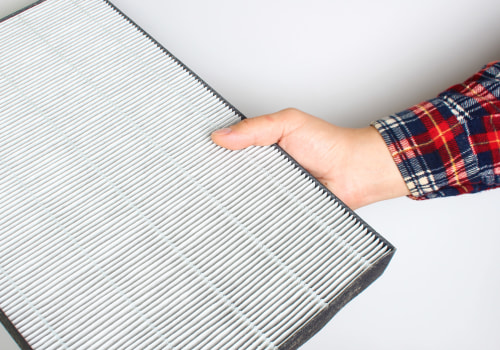
A 16x20x1 HVAC home air filter measures 16 inches by 20 inches by 1 inch and fits the return air slot of a residential furnace or air handler. It captures airborne particles — dust, pollen, mold spores, and debris — before your system recirculates that air through your home.
Size: 16" × 20" × 1" nominal. Actual dimensions run slightly smaller, which is normal and expected.
MERV rating: MERV 8 captures particles down to 3 microns, including mold spores and pollen. MERV 11 captures finer particulates. MERV 13 delivers higher capture rates but can restrict airflow on older residential systems — an important consideration for Florida homes built before 2005.
Filter media: Pleated filters capture significantly more particles than flat fiberglass panels at this size. For Florida homeowners managing post-storm air conditions, pleated is the practical choice.
Replacement schedule: Every 60–90 days under normal conditions. During hurricane season (June 1–November 30), inspect after every named storm — post-storm particle loads saturate filters faster than standard household conditions do.
Getting the MERV rating right for your system and your season matters more than most homeowners expect. We've seen that difference play out across Florida homes through storm season after storm season.
Top Takeaways
A 16x20x1 HVAC home air filter is the primary barrier between post-storm particulates and your family’s indoor air—inspect and replace it as part of every storm response, not your standard maintenance schedule.
MERV 8 to MERV 11 is the right range for most Florida residential systems. Effective particle capture, without the airflow resistance that strains older equipment.
Inspect after every named storm that passes through or near your area—a storm doesn’t need to make direct landfall to load your filter.
Pleated filters outperform fiberglass on fine particle and mold spore capture. Florida’s storm conditions require pleated media. Fiberglass isn’t up to it.
Mold growth starts in 24 to 48 hours after water intrusion—which means post-storm filter replacement is a health decision, not a housekeeping one.
Replace when the filter shows it: visible discoloration, reduced airflow, musty odors in conditioned air, or new respiratory symptoms in household members.
Stock extra filters before June 1 so the next named storm becomes a routine maintenance check instead of an emergency supply run.
Why Storm Season Demands More From Your 16x20x1 Filter
Most Florida homeowners seal their windows when a storm approaches and assume that keeps the bad air out. It doesn’t. Every named storm that passes within range of your home stirs soil particulates, roof debris, and organic matter into the surrounding air. Your HVAC system’s return intake doesn’t distinguish between post-storm air and a calm afternoon in March—it pulls in whatever’s there. By the time the sun comes back out, your system has already been circulating storm-loaded air through your home for hours.
A filter that saturates in days after a storm isn’t defective. It’s overloaded—handling a particle volume your system was never designed to see outside of these six months. Storm season demands more frequent inspection, and usually high-quality air filters for HVAC with a higher MERV rating, than your system needed in February.
What MERV Rating Is Right for Florida Storm Season?
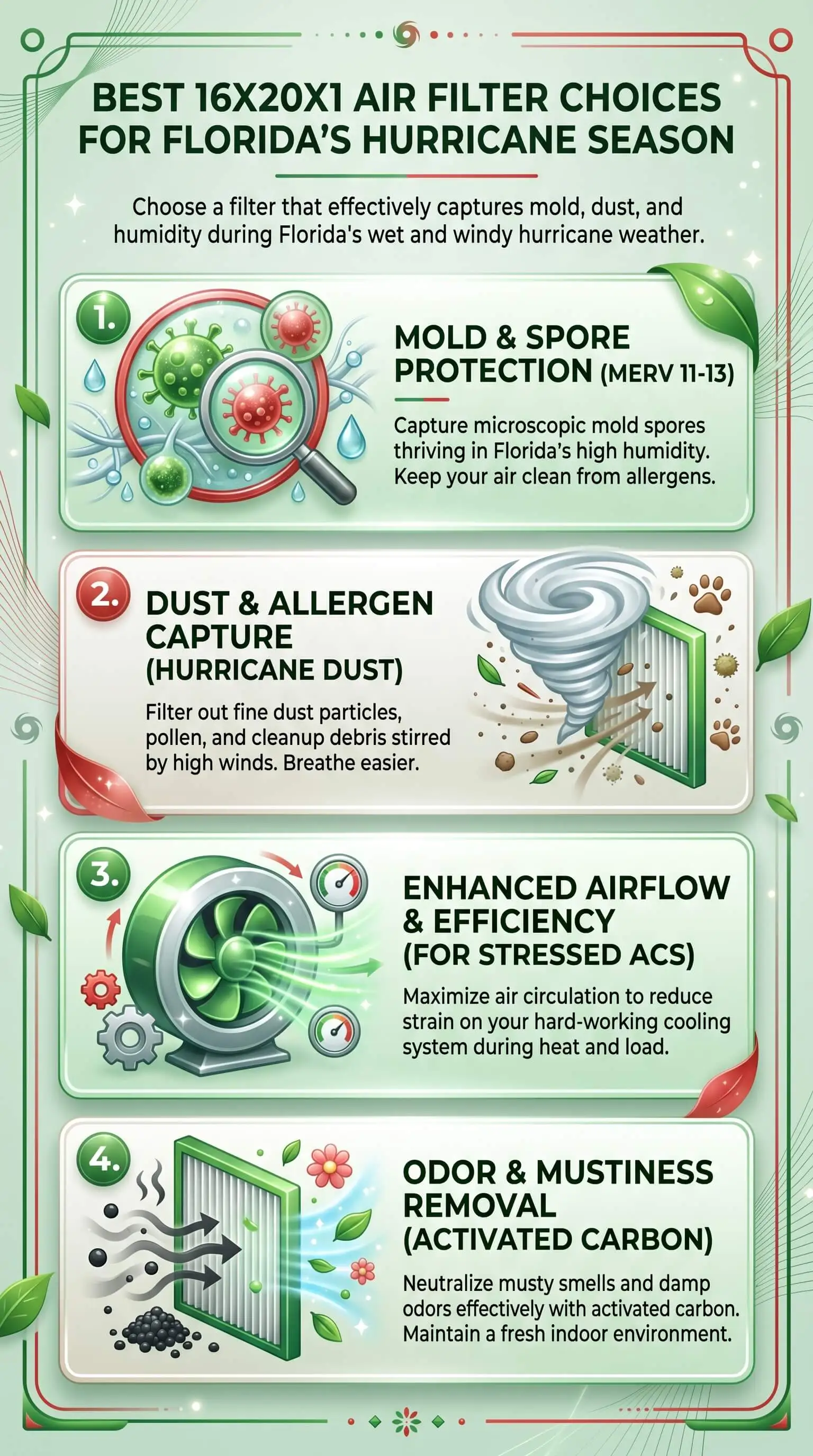
MERV 8 through MERV 11 is where most Florida homeowners should land. MERV 8 captures particles down to 3 microns—that covers pollen, mold spores, and the coarser debris a storm kicks up. MERV 11 goes further, catching finer fragments including the microscopic mold spore pieces that go airborne as wet building materials dry out in the days after a storm. Browse the full selection of 16x20x1 filters to compare MERV ratings and media types for your system.
MERV 13 sounds like the smarter choice on paper. For a lot of Florida homes, it creates more problems than it solves. The additional airflow resistance strains a blower motor that’s already working hard through summer heat—and a system that can’t move enough air through its filter isn’t protecting anyone. In Florida homes built before 2005, MERV 8 to MERV 11 hits the right balance between clean air and system health.
How Often Should You Change Your Filter During Hurricane Season?
Standard filter replacement runs every 60 to 90 days under normal conditions. Storm season changes that math.
Inspect your filter after every named storm that passes within range of your home. A tropical storm doesn’t need to make direct landfall to affect your indoor air quality—even a storm tracking hundreds of miles offshore shifts particulate concentrations inside homes along its path.
Replace immediately if the filter shows visible gray or brown discoloration. Reduced airflow at your vents or new respiratory symptoms in your household are equally clear signals—don’t wait for the calendar date. Waiting until your scheduled replacement after a storm is a mistake most Florida homeowners make only once.
Pleated vs. Fiberglass: Which Handles Storm Conditions Better?
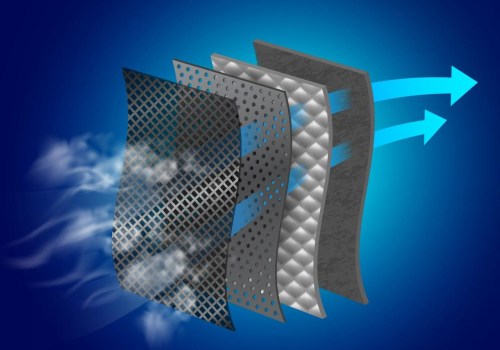
Pleated filters carry more surface area than flat fiberglass panels, and that surface area is what determines how many particles a filter captures before it needs replacement. A pleated air filter traps significantly more fine storm debris than a fiberglass version of the same size.
Fiberglass filters are built to protect your HVAC equipment from large debris. That’s their job and about the extent of it. When post-storm conditions require capturing fine particulates and the mold spore fragments that wet building materials release as they dry, fiberglass falls short. A quality pleated filter in the MERV 8-to-11 range does what fiberglass can’t.
Signs Your 16x20x1 Filter Needs Replacing After a Storm
After any named storm, pull your filter out and check for these:
Visible discoloration: a clean filter is white or pale gray. Post-storm exposure turns filters dark brown or black within days.
Reduced airflow: air coming from your vents that feels noticeably weaker usually means a saturated filter is restricting the system’s output.
Musty or earthy odor: conditioned air that smells like soil or damp material means organic matter is moving through your system.
New respiratory symptoms: coughing, sneezing, or allergy flare-ups that weren’t present before the storm are a direct signal to change the filter.
Humidity imbalance: a home that feels more humid than usual despite the system running normally can indicate a saturated filter limiting the system’s ability to manage moisture.
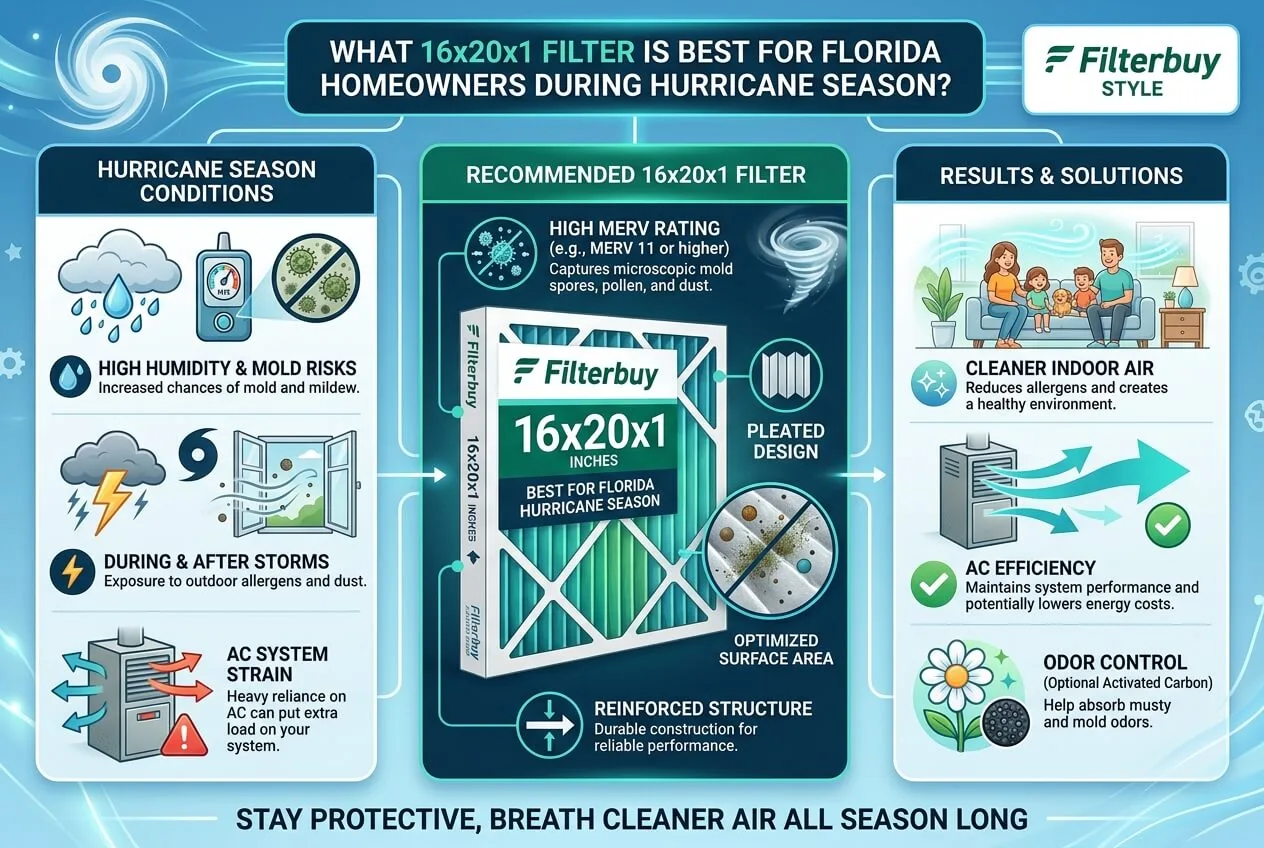
“The filters we design for high-humidity, storm-prone climates go through specific loading tests against particles that replicate post-storm air conditions—because Florida homeowners face a completely different air quality challenge than someone replacing a filter in a landlocked state. A MERV 8 or MERV 11 pleated filter built with the right media density handles that challenge effectively without straining the system.”
Essential Resources
Understanding What’s Really in Your Indoor Air
The EPA’s foundational indoor air quality guide makes a case that surprises most homeowners: the air inside your home is often more polluted than the air outside, and the sources driving it are largely invisible. For Florida households that run sealed, air-conditioned homes through storm season, this resource shows exactly what your HVAC filtration system is working against every day it runs.
Source: https://www.epa.gov/indoor-air-quality-iaq/introduction-indoor-air-quality
How Biological Contaminants Enter Your Home After a Storm
This EPA resource on biological contaminants walks through how mold spores, bacteria, and organic pollutants get into residential HVAC systems—and what filtration and moisture control can do to cut that cycle off. Florida homes that experience heavy rainfall or storm surge events will find this resource especially relevant to what happens inside their walls after the storm passes.
Source: https://www.epa.gov/indoor-air-quality-iaq/biological-contaminants-and-indoor-air-quality
What Mold Exposure Does to Your Family’s Health
The CDC explains how mold enters homes through HVAC systems and what health effects follow—from sore throats and persistent coughing to severe reactions in people with asthma. Florida’s post-storm humidity creates exactly the conditions mold needs to establish in 24 to 48 hours. Reading this helps you understand why filter replacement after a storm isn’t optional for households with vulnerable members.
Source: https://www.cdc.gov/mold-health/about/index.html
How Active the Atlantic Hurricane Season Typically Gets
NOAA’s National Hurricane Center publishes the authoritative data on Atlantic hurricane season patterns, including average storm counts and the timing of peak activity. This is the resource that puts Florida’s six-month risk window in actual numbers—and makes clear why no part of the season should be treated as a slow period.
Source: https://www.nhc.noaa.gov/climo/
Preparing Your Home Before a Storm Arrives
FEMA’s Ready.gov hurricane preparedness guide covers what to do before, during, and after a storm, including the indoor air quality and mold precautions that apply once the storm has passed. It’s where filter inspection and replacement belong on the pre-season checklist—alongside the generator check and the go-bag.
Source: https://www.ready.gov/hurricanes
The MERV Rating Standard That Defines Your Filter’s Capability
ASHRAE’s filtration guidance explains how MERV ratings are tested and what particle size ranges each rating actually captures. If you’ve ever wondered why MERV 8 to MERV 11 is the right call for most Florida residential systems—and why MERV 13 creates problems on older equipment—the standard behind the rating answers that question directly.
Source: https://www.ashrae.org/technical-resources/filtration-and-disinfection-faq
A Homeowner’s Complete Guide to Indoor Air Pollutants
The EPA’s “Inside Story” covers every major indoor air pollutant category in plain language, with clear steps—including HVAC filtration—that reduce your household’s exposure. If you want to understand what’s actually moving through your home’s air supply before and after a storm, this is the most practical place to start.
Source: https://www.epa.gov/indoor-air-quality-iaq/inside-story-guide-indoor-air-quality
Supporting Statistics
The EPA’s research puts indoor air pollutant concentrations at 2 to 5 times higher than typical outdoor levels—and that gap widens when a storm drives additional particulates into a home’s air supply. A properly rated 16x20x1 HVAC home air filter is the primary tool Florida households have for keeping that ratio from climbing further after every named storm that passes through.
Source: https://www.epa.gov/report-environment/indoor-air-quality
NOAA’s 30-year climatological record puts the average Atlantic hurricane season at 14 named storms and 7 hurricanes—and Florida absorbs more U.S. landfalling storms than any other state. Seven or more potential inspection points in a single season isn’t overcaution. It’s what the data says a Florida homeowner should plan for.
Source: https://www.nhc.noaa.gov/climo/
The CDC confirms that mold growth starts in homes left wet for more than 24 to 48 hours after a flood or water intrusion event. Florida’s post-storm conditions create exactly that window—and the mold spores those environments produce move directly through any HVAC system whose filter hasn’t been replaced since the storm.
Source: https://www.cdc.gov/fungal/about/about-invasive-mold-infections.html
Final Thoughts and Opinion
A filter isn’t storm prep the way a generator or a go-bag is. Most Florida homeowners figure that out the hard way—after the storm, when the air in their sealed-up house smells wrong and no one can figure out why the system is running harder than it should.
Stock two 16x20x1 MERV 8 or MERV 11 pleated filters before June 1. Inspect after every storm with meaningful rainfall in your area. Replace when the filter shows it, not when the calendar allows it. The cost of an extra filter is a few dollars. Running a saturated filter through storm season costs more—in HVAC wear, in mold spore circulation, and in air quality that shows up as respiratory aggravation for the people in your home who can least afford it.
Florida homeowners who treat filter replacement as a storm season task—not an annual chore they’ll get to eventually—breathe noticeably better air through the six months this state earns its reputation.
Frequently Asked Questions
Q: What size filter do I need for a 16x20x1 slot?
A: A 16x20x1 filter is 16 inches by 20 inches by 1 inch nominal. A few things worth knowing before you order:
Confirm your existing filter’s dimensions on the cardboard frame before purchasing—don’t go by memory.
Actual filter dimensions run slightly smaller than the nominal size. That’s standard and expected.
A filter that fits too loosely lets unfiltered air bypass around the edges. The MERV rating doesn’t matter if the seal isn’t there.
Q: What MERV rating is best for Florida storm season?
A: MERV 8 to MERV 11 covers the right range for most Florida residential HVAC systems during hurricane season. Here’s the breakdown:
MERV 8 captures mold spores, pollen, and most post-storm debris particles down to 3 microns.
MERV 11 adds capture of finer particulates—including the smaller mold spore fragments that dry wet materials release.
MERV 13 may restrict airflow on older Florida systems, adding stress to equipment already running in peak summer heat.
Check your HVAC system’s documentation or ask a local technician if you’re not sure what MERV rating your blower motor is rated for.
Q: How often should I change my HVAC filter during hurricane season?
A: Inspect after every named storm. Replace every 30 to 60 days during active storm periods. The specifics:
Standard replacement is every 60 to 90 days under normal household conditions.
After a named storm, that timeline compresses. Saturation can happen in days.
Replace immediately if you see visible discoloration, notice reduced airflow, or detect musty odors coming from conditioned air.
Florida’s hurricane season runs June 1 through November 30. Six months of elevated particle loads means six months of tighter inspection frequency.
Q: Can my HVAC filter protect against mold spores after a flood?
A: A MERV 8 or higher pleated filter captures airborne mold spores before they recirculate—but it can’t address mold already growing on wet surfaces. The distinction matters:
Filtration intercepts mold spores that are moving through your conditioned air. That’s what it’s built to do.
Mold established on wet drywall, carpet, or insulation needs professional remediation. A filter alone won’t resolve it.
Replace your filter as part of post-flood cleanup. A saturated filter circulates more contaminants than it captures.
If water intrusion lasted more than 48 hours or covered significant surface area, contact a mold remediation professional.
Q: Is a 16x20x1 MERV 8 filter enough for post-hurricane air quality?
A: For most Florida homes, yes. A well-built MERV 8 pleated filter provides solid baseline protection against the primary post-storm particulates. Keep in mind:
MERV 8 captures particles down to 3 microns, which covers most mold spores and pollen.
Households with allergy or asthma sufferers will see meaningful improvement with MERV 11’s finer particle capture.
Filter quality and fit matter as much as the MERV number. A well-constructed MERV 8 can outperform a poorly built MERV 11.
Q: Does hurricane season affect MERV 13 filter performance differently than lower-rated filters?
A: Yes, and not in a good way for older Florida homes. MERV 13 creates more airflow resistance, which becomes a real problem on equipment built to different pressure tolerances. Specifically:
Florida homes built before 2005 often have blower systems not rated for the static pressure increase MERV 13 generates.
A system straining against a MERV 13 filter circulates less conditioned air per cycle—which hurts both filtration and cooling efficiency at the same time.
For most Florida homeowners, MERV 11 delivers comparable post-storm protection with significantly less stress on the equipment.
Q: What should I do with my old filter after a major storm?
A: Remove it carefully, seal it in a plastic bag, and install a fresh one. A few details that matter during removal:
A saturated post-storm filter is carrying concentrated mold spores and storm debris. Handle it without shaking or squeezing to avoid redistributing particles into the air.
Wear a dust mask if you’re pulling out a heavily loaded filter.
Don’t try to clean and reinstall a used 1-inch pleated filter. These are single-use. Cleaning one doesn’t restore its capture ability—it just delays the replacement you’ll need to make anyway.
Ready to Protect Your Home This Storm Season?
Florida2019s storm season doesn2019t wait. Browse the full 16x20x1 filter lineup at Filterbuy, stock what your system needs before June 1, and turn the next named storm into a routine check instead of a scramble.